
The final finish of a metal component is more than just a surface treatment; it is a statement of durability, aesthetics, and performance. Manufacturers widely use powder coating in modern manufacturing because it resists corrosion, wear, and environmental stress.
Available in a wide range of colors, textures, and gloss levels, powder coating offers both visual appeal and long-term protection across many applications.
Understanding powder coating finish options such as matte, gloss, wrinkle, and textured finishes, as well as how they pair with printing techniques, helps manufacturers balance function and appearance.
How Powder Coating Works
Powder coating uses a dry finishing process that applies a fine, electrostatically charged powder to a metal surface. Heat then cures the powder and forms a durable, protective layer.
A Dry Finishing Process
Unlike traditional liquid paint, powder coating contains no solvents and produces a thicker, more uniform coating without drips or runs.
The resulting tough finish protects the underlying metal. Additional neutral manufacturing information is available through NIST MEP.
Types of Powder Coating
Before choosing powder coating finish options, it helps to understand the two main categories of powder coating: thermosets and thermoplastics.
What to Know About Thermosets
Thermosets form chemical bonds during heating and curing.
- These work well for applications where heat resistance matters.
- A chemical reaction occurs during curing.
- The material cannot melt again once it cures.
- The application may become brittle as the thickness increases.
What to Know About Thermoplastics
Thermoplastics do not form the same permanent chemical bonds during curing.
- Manufacturers can remelt and reshape these materials.
- They offer flexibility for applications with potential impact.
- They may cost more than thermosets.
Popular Powder Coating Finish Options
Different powder coating finish options change the visual appearance and surface texture of a finished metal component.
Matte Finishes
Matte coatings create a low-gloss surface with limited reflection. They can provide a subdued appearance for equipment and metal housings.
Gloss Finishes
Gloss coatings create a more reflective surface and can make finished colors appear more pronounced.
Satin Finishes
Satin coatings fall between matte and high gloss. They offer some reflection while maintaining a softer overall appearance.
Textured Finishes
Textured powder coating finish options create a noticeable surface pattern that changes both appearance and feel.
Wrinkle Finishes
Wrinkle coatings create a more pronounced patterned surface and can give fabricated components a distinctive appearance.
Powder Coating Application Process
The performance of different powder coating finish options depends in part on proper surface preparation and application.
Surface Preparation
Before powder coating, manufacturers clean the metal surface to remove contaminants like grease, dirt, or rust. Proper surface preparation supports coating adhesion and a consistent finished surface.
Application of Powder
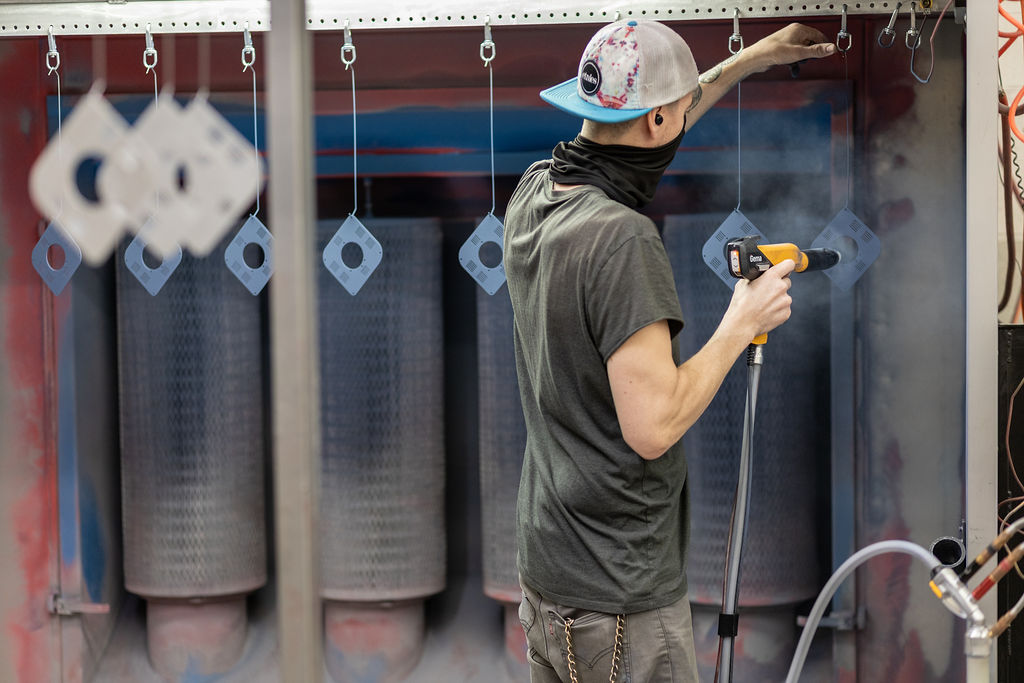
Spray equipment or other appropriate systems give the powder coating material an electrostatic charge and apply it to the metal surface. The charged particles then adhere to the grounded metal.
Powder Coating Booth
In the powder coating booth, spray equipment directs charged powder particles onto the metal part. Electrostatic attraction allows the powder to cling to the surface before curing.
Workplace information related to coating and spray operations is available through OSHA spray operations guidance.
Curing
After application, manufacturers transfer the metal part to a curing oven, where heat allows the powder to flow and form a continuous coating.
Advantages of Powder Coating
Manufacturers choose powder coating finish options because they can combine protective performance with a wide range of colors, textures, and appearances.
Durability
Powder coatings provide a robust finish that resists chipping, scratching, and fading, making the process useful for components exposed to handling and demanding environments.
Appearance
Powder coating offers a wide range of colors, textures, and finishes, giving designers flexibility when selecting the final appearance of metal parts.
Material Efficiency
Powder application can support efficient material use, and some equipment and processes allow manufacturers to collect unused overspray.
Neutral standards and materials information is available through ASTM International.
Printing on Powder-Coated Metal
After choosing powder coating finish options, manufacturers may also need to add designs, logos, labels, or graphics to the finished component.
Silk Screening
Silk screening, also known as screen printing, uses a mesh stencil to transfer ink onto a metal surface. A squeegee forces the ink through open areas of the stencil, creating the desired design.
Manufacturers can use this process on operator interface panels and other labeled metal components.
Pad Printing
Pad printing transfers designs onto metal surfaces using an offset process. A silicone pad picks up ink from a plate and presses it onto the surface.
Digital Printing
Digital printing directly transfers designs from a digital file to the metal surface. The process can support detailed graphics and variable information.
Finishing Fabricated Metal Components
Manufacturers often select powder coating finish options as part of the complete manufacturing process rather than after they make fabrication decisions.
Finishing Services
Eagle Metalcraft provides finishing manufacturing for fabricated metal components.
Electronic Enclosures
Manufacturers apply finishes to custom electronic enclosures, panels, cabinets, covers, and other fabricated metal products.
Fabrication and Assembly
Fabrication and assembly can combine manufactured parts into larger components or subassemblies.
Laser-Cut Metal Parts
Laser-cut components move to coating after manufacturers complete the required cutting and forming operations.
Choosing the Right Finish
The right powder coating finish options depend on appearance, handling, environment, and any printing or labeling requirements.
Consider Appearance
Color, gloss level, and texture determine how the finished component looks.
Consider the Application
How workers handle the part and where manufacturers use it can affect which finish makes the most sense.
Consider Printing Requirements
When a component requires graphics or labels, manufacturers should consider the coating and printing method together.
Eagle Metalcraft also supports electronic fabrication, electronic chassis, and sub-assemblies that may require finished surfaces.
Broader neutral manufacturing resources are also available through SME and ISO.
FAQ
These questions cover common powder coating finish options and printing processes for fabricated metal components.
What are common powder coating finish options?
Common powder coating finish options include matte, gloss, satin, textured, and wrinkle finishes.
How do manufacturers apply powder coating?
Manufacturers electrostatically apply dry powder to a prepared metal surface and then use heat to cure it.
What is the difference between thermoset and thermoplastic powder coating?
Thermoset coatings undergo a chemical reaction during curing, while manufacturers can remelt thermoplastic coatings under suitable conditions.
Can manufacturers print on powder-coated metal?
Yes. Manufacturers can use silk screening, pad printing, and digital printing to add graphics, labels, and other information.
Why does surface preparation matter?
Cleaning and preparing the metal helps the powder adhere consistently to the surface.