
Tube laser cutting has rapidly become a go-to technology in metal fabrication, offering precision, speed, and flexibility for both simple and complex parts. Whether you’re evaluating it for industrial production, prototyping, or custom projects, understanding how this laser cutting works and when to use it is critical for success.
This comprehensive guide breaks down the fundamentals of tubular last cutting — from basic mechanics and design considerations to real-world machine and material insights. It blends authoritative industry explanations with genuine metalworking community perspectives to give you a practical, balanced picture.
What Is Tube Laser Cutting?
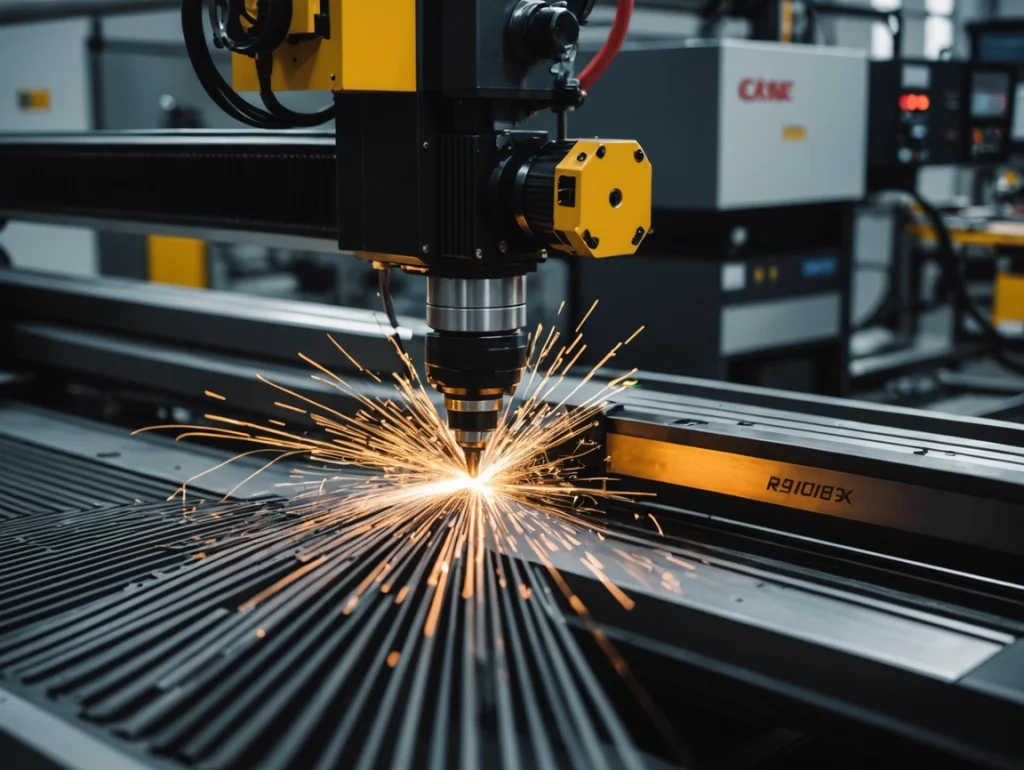
Tube laser cutting is a manufacturing process that uses a high-powered laser beam to cut and shape metal tubes and profiles. Instead of traditional cutting methods like sawing or drilling, a laser beam precisely melts or vaporizes metal along programmed tool paths to create clean, accurate cuts.
How the Process Is Structured
A specialized tube laser machine feeds the metal tube through a rotating chuck, while the laser—guided by CNC (computer numerical control) and CAD data—cuts features, holes, angles, and even complex 3D shapes into the tube.
This process is especially useful for round, square, and rectangular profiles and can handle a range of materials including steel, stainless steel, and aluminum.
Why Laser Tube Cutting Matters
Traditional tube cutting techniques — like sawing, milling, or plasma cutting — often involve multiple setups, manual fixturing, and extensive finishing. These methods can be time-consuming, labor-intensive, and prone to errors.
Key Benefits Over Traditional Methods
Tube laser cutting addresses these issues by offering:
- Superior precision, with cuts within thousandths of an inch.
- The ability to execute complex geometry directly from CAD data.
- Reduced post-processing due to clean laser edges.
- Greater speed through automated CNC control.
These advantages make this cutting especially valuable for industries such as automotive, aerospace, construction, furniture manufacturing, and custom fabrication shops.
How Tube Laser Cutting Works
Understanding the mechanics of the process helps demystify why this laser cutting is so effective.
Step-by-Step Overview
- The tube is secured between chucks that rotate and feed it into the cutting area.
- A high-power laser source, commonly a fiber laser, generates a focused beam.
- CNC control synchronizes tube rotation and laser movement.
- The laser melts or vaporizes material, creating a narrow kerf.
- Finished features such as holes, bevels, and notches are completed in one operation.
This workflow eliminates re-fixturing and secondary operations, making it especially efficient for complex parts or higher volumes.
Common Tube Laser Cutting Materials
Tube laser is versatile and supports a wide range of metals, many of which are defined by ASTM material standards.
Frequently Used Metals
- Carbon steel, valued for strength and affordability.
- Stainless steel, prized for corrosion resistance and appearance.
- Aluminum, chosen for lightweight and corrosion-resistant applications.
- Brass and copper, which can be cut with properly configured laser systems.
Laser tube cutting machines also support multiple tube profiles, including round, square, and rectangular sections.
Design Guidelines for Tube Laser Cutting
Success starts at the design stage. Parts must be designed with the process in mind.
Core Design Rules
- All cuts must go completely through the tube wall.
- Begin with an extruded tube model before adding cut features.
- Account for corner radii and wall variations in structural tubing.
- Avoid blind or inaccessible internal features.
Following these principles reduces production errors and ensures reliable translation from CAD to machine toolpaths, aligning with best practices outlined by ASME.
Insights From the Fabrication Community
Practical experience from fabricators highlights important considerations when adopting tube laser cutting.
Real-World Considerations
Machine selection is critical, as lower-cost systems may result in higher downtime and maintenance. For simpler cuts, traditional saws can sometimes be more cost-effective than laser systems. Laser power and type also matter, particularly when cutting thicker materials or complex profiles.
These insights reinforce that while tube laser cutting excels at precision and complexity, it is not always the best solution for every application.
Advantages of Tube Laser Cutting
Modern tube laser systems provide a range of performance benefits.
Operational Advantages
- High precision and repeatability.
- Faster production cycles.
- Reduced material waste.
- Design flexibility for complex geometries.
- Improved operator safety due to non-contact cutting, consistent with OSHA guidance.
Limitations and Considerations
Despite its advantages, this laser cutting is not without trade-offs.
Potential Challenges
- High initial equipment investment.
- The need for skilled CAD/CAM operators.
- Material and thickness limitations depending on machine capability.
Applications of Tube Laser Cutting
The technology is widely used across industries.
Industry Use Cases
- Automotive frames, exhausts, and supports.
- Aerospace structural and lightweight components.
- Construction and architectural metal elements.
- Furniture and decorative metal fabrication.
Its ability to combine speed and complexity makes it ideal for both high-volume and custom fabrication.
Future Trends in Tube Laser Cutting
Ongoing advancements continue to push the technology forward.
What’s Next
Improved CAD-to-CNC integration, real-time monitoring, and automation are reducing errors and setup time. Enhanced software simulation allows designers to validate parts before cutting, while improved interfaces make advanced systems accessible to smaller shops.
Transforming Modern Metal Fabrication
Tube laser cutting is a transformative process in modern metal fabrication, combining precision, speed, and flexibility to produce high-quality parts with minimal waste. By understanding its mechanics, design requirements, and real-world considerations, fabricators can determine when tube cutting provides a true competitive advantage.
Frequently Asked Questions About Tube Laser Cutting
These common questions address practical concerns fabricators, engineers, and buyers often have when evaluating tube cutting for real-world projects.
What types of tube profiles can be laser cut?
This laser cutting commonly supports round, square, rectangular, and oval tubes. Many modern machines can also handle specialty profiles such as angle iron, C-channel, and custom extrusions, depending on machine configuration and fixturing.
What thickness ranges are suitable for tube laser cutting?
Thickness capability depends on the laser’s power and material type. Thin-walled tubes cut quickly, while thicker structural tubing may require higher laser wattage.
Is Tubular Laser Cutting more accurate than traditional methods?
Yes. This type of cutting typically achieves much tighter tolerances than saw cutting, drilling, or plasma cutting.
Does This Cutting eliminate secondary operations?
In many cases, yes. Holes, slots, miters, and notches can be cut in one operation, reducing or eliminating drilling, milling, deburring, and manual fit-up.
When should a shop choose tube laser cutting over other methods?
This laser cutting is ideal when precision, repeatability, complex geometry, and reduced setup time are priorities.