
When a part needs a precise profile cut—especially for complex geometries—wire EDM and laser cutting are two of the most common options.
They’re both “non-contact” processes, but they work in very different ways. Below is a practical, shop-floor comparison to help you pick the best method for your material, tolerance, and timeline.
What Is Wire EDM?
Wire EDM (wire electrical discharge machining) uses controlled electrical sparks between a continuously fed wire and a conductive workpiece to erode material.
Because it relies on electrical discharge, the part material must be electrically conductive (most metals and alloys).
Advantages of Wire EDM
• Extremely tight tolerances and repeatable accuracy for precision components
* Excellent for intricate shapes, sharp internal corners, and fine details
* No cutting forces on the part—helpful for thin, delicate, or fragile features
* Works well on hardened materials (tool steels, superalloys) that are difficult to machine conventionally
* Minimal burrs and a consistent edge that often reduces secondary finishing
Wire EDM is often associated with high-precision manufacturing environments aligned with standards from organizations like ASME and material specifications developed by ASTM International.
Disadvantages of Wire EDM
• Slower cutting speeds compared to laser for many simple profiles
* Limited to conductive materials (not suitable for most plastics, wood, glass, etc.)
* Typically not the best fit for cutting tubes/formed shapes compared to flat stock applications
* Requires dielectric fluid and careful setup, which can add time for certain jobs
Common Wire EDM Applications
• Mold and die components, inserts, and punches
* Aerospace and medical parts requiring tight tolerance features
* Parts with narrow slots, intricate contours, or complex profiles
* Hardened components where maintaining dimensional integrity is critical
* One-off or low-volume precision parts where accuracy outweighs speed
What Is Laser Cutting?
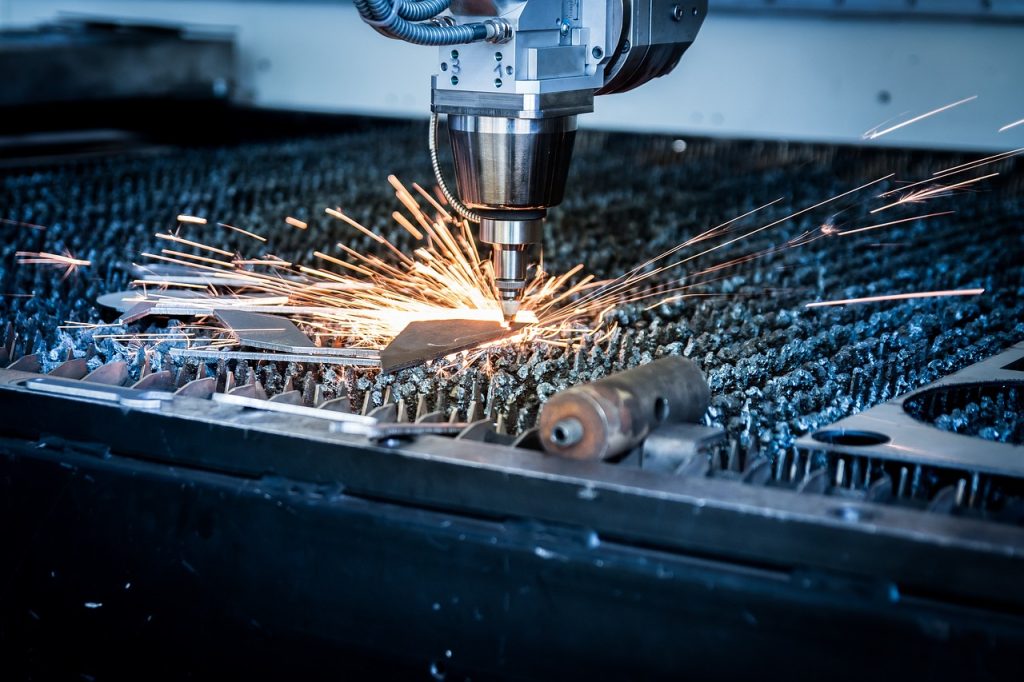
Laser cutting uses a focused beam of light to heat, melt, or vaporize material along a programmed path.
Assist gases and CNC control help create clean profiles at high speed, especially in sheet and plate applications.
Advantages of Laser Cutting
• Fast turnaround for many sheet-metal profiles and production runs
* Excellent for complex 2D shapes without custom tooling
* Broad material compatibility (metals, plastics, wood, composites—depending on the laser and setup)
* Clean edges and consistent results on appropriate thicknesses/materials
* Cost-effective for high-volume parts where speed is the priority
Industry groups such as SME and publications like The Fabricator frequently highlight laser cutting for its production efficiency and flexibility in sheet metal fabrication.
Disadvantages of Laser Cutting
• Heat-affected zone (HAZ) can impact edge properties on some materials
* Thicker materials can increase burrs/slag risk and reduce edge quality
* Reflective materials (certain aluminums/coppers) can be more challenging depending on equipment
* May require post-processing for cosmetic edges or critical features
Common Laser Cutting Applications
• Sheet metal brackets, panels, frames, and enclosures
* Rapid prototyping and short-run fabrication
* Automotive, electronics, signage, and general industrial components
* Parts where speed and cost per part matter more than ultra-tight tolerances
* High-volume production of consistent 2D profiles
Wire EDM vs. Laser Cutting: Key Differences
Choosing between these processes usually comes down to a few practical factors. These factors can include material type, tolerance requirements, thickness, edge condition, and lead time.
Material Compatibility
• Wire EDM: Conductive metals and alloys only
* Laser Cutting: Wide range of materials (varies by laser type and thickness)
Tolerances and Precision
• Wire EDM: Best choice when you need very tight tolerances, fine details, and accurate internal features
* Laser Cutting: Highly accurate for many applications, but ultra-tight tolerances can be harder to hold depending on thickness/material and thermal effects
Speed and Throughput
• Wire EDM: Typically slower—often chosen for precision-critical features rather than speed
* Laser Cutting: Generally faster for sheet profiles and production quantities
Thickness Considerations
• Wire EDM: Often preferred when thickness increases and precision remains critical
* Laser Cutting: Commonly most efficient in thinner to moderate thickness ranges (capability depends on the laser and material)
Edge Quality and Secondary Finishing
• Wire EDM: Smooth, consistent edges with minimal burrs; often reduces finishing steps
* Laser Cutting: Can produce very clean edges, but slag/burr control becomes more important as thickness rises
Heat and Part Distortion
• Wire EDM: Low mechanical stress and no direct cutting forces; excellent for delicate geometries
* Laser Cutting: Thermal input can create a heat-affected zone and may introduce minor distortion in some thin parts
Quality management frameworks such as those published by ISO often guide how manufacturers evaluate tolerances, repeatability, and process control across both methods.
Which Process Should You Choose?
If you’re deciding quickly, use this simple rule of thumb: choose laser cutting when speed and cost per part are the priority for 2D profiles. Then, choose wire EDM when tolerance, detail, and precision are non-negotiable—especially on thicker or hardened metals.
Pick Wire EDM When You Need:
• Ultra-tight tolerances and precision fits
* Intricate profiles, sharp internal corners, or narrow slots
* Hardened materials or difficult alloys
* Minimal burrs and less secondary finishing
* Low distortion on thin or delicate parts
Pick Laser Cutting When You Need:
• Fast turnaround and high throughput
* Cost-effective production for sheet profiles
* Broad material options (including non-metals)
* Clean, consistent 2D parts at scale
* Rapid prototyping without custom tooling
Organizations like NIST MEP emphasize selecting manufacturing processes based on part requirements, throughput goals, and long-term production efficiency.
Next Steps
The best choice depends on your print, material, thickness, and performance requirements.
If you share your part drawing, a shop can recommend the most efficient process. They can also flag any design tweaks that could reduce cost or lead time.
FAQ
Below are quick answers to common questions about choosing between wire EDM and laser cutting.
Is wire EDM more accurate than laser cutting?
Wire EDM is generally preferred when extremely tight tolerances, fine details, and sharp internal features are required. Laser cutting is highly accurate, but ultra-tight tolerances can be more challenging depending on material and thickness.
Can laser cutting handle thicker materials?
Laser cutting can process a range of thicknesses, but efficiency and edge quality may decrease as thickness increases. Wire EDM is often chosen when thickness increases and precision remains critical.
Does wire EDM create heat distortion?
Wire EDM applies no direct cutting forces and is well-suited for delicate geometries. Laser cutting introduces thermal input that can create a heat-affected zone and minor distortion in some thin parts.
Which process is faster for production runs?
Laser cutting is generally faster for sheet profiles and higher production quantities. Wire EDM is typically slower and selected for precision-critical features rather than speed.
What materials can each process cut?
Wire EDM is limited to electrically conductive metals and alloys. Laser cutting supports a wider range of materials, depending on the laser type and setup.